

What are Algal Toxins?
Algal toxins are just as diverse as the organisms that produce them
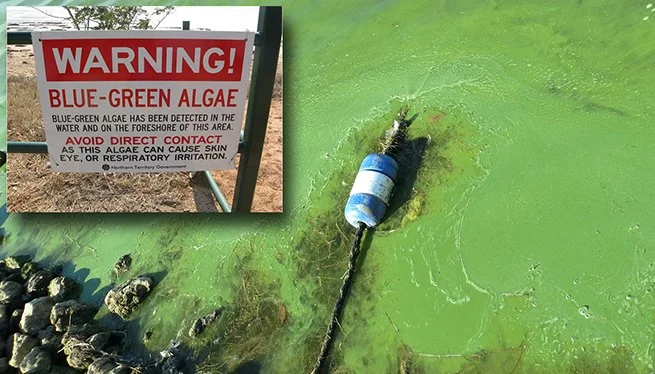
The toxins are typically grouped by their main mode of action, such as:
Hepatotoxins (toxins that damage the liver)
Dermatoxins (toxins that damage the skin)
Neurotoxins (toxins that damage the nerve cells)
Some toxins can even be harmful in more than one way, such as cylindrospermopsin, which not only have the ability to harm the liver, but are also harmful to kidneys and may even cause cancer.
There is no known antidote for many of the toxins, so it is important to monitor algal blooms for their presence. It is also important to keep in mind that not all cyanobacteria are toxin producers, known toxin producers may not be producing at the time of the bloom, and some cyanobacteria can produce several different toxins at the same time. With monitoring and knowledge, the ability to keep people and animals safe can be relatively straightforward and undemanding.
The below toxins are the most frequently tested in regards to freshwater, but the list is not all inclusive.
Other toxins we monitor include dermatoxins (e.g. aplysiatoxins, lyngbyatoxin-a), okadaic acid/dinophysitoxins, brevetoxins and the analyte BMAA
-
Microcystins / Nodularins
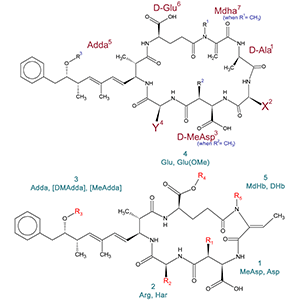
Microcystins (MCs; heptapeptides) and Nodularins (NODs; pentapeptides) are hepatotoxic (target = protein phosphatases in liver) to most vertebrates. There are currently >250 structural variants of these toxins, making analysis challenging. Since MCs and NODs can be present in both marine and freshwater environments, it is important to monitor for both. This class of toxins can be acutely and chronically toxic. We have observed low to extreme (>10,000 ppb) levels of MCs/NODs in the environment.
-
Cylindrospermopsin
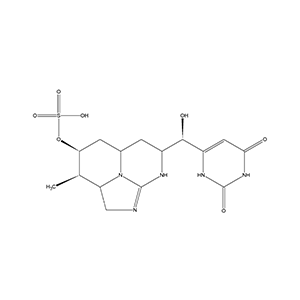
Cylindrospermopsin (CYN) and Epi-cylindrospermopsin (Epi-CYN) are hepatotoxic (target = liver) and nephrotoxic (target = kidneys) to most vertebrates. CYN is not reported as prevalently as microcystins, but it has been implicated in animal and human intoxication events around the world. In the US, contrary to the implications of its name, Cylindrospermopsis is not known to be a source of CYN. Instead, Aphanizomenon, Cuspidothrix and Dolichospermum are some of the confirmed producers. We have observed persistent low level CYN/Epi-CYN up to high (>200 ppb) levels in the environment.
-
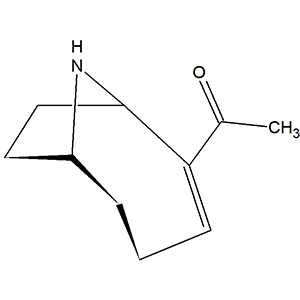
Anatoxin-a / Homoanatoxin-a
Anatoxin-a (ATX) and homoanatoxin-a (HTX) are acutely neurotoxic (target = cholinergic receptors) and have been responsible for animal poisonings around the world. Many monitoring programs are focused on the analysis of ATX, with HTX and associated analogs (e.g. epoxy and dihydro derivatives) largely ignored. ATX and HTX are both considered highly acute toxins, with an i.p. LD50 of 0.25 mg/kg. We have detected low to moderate (20 ppb) levels of ATX in planktonic cyanobacteria and much higher HTX (>1000 ppb) levels in benthically derived cyanobacteria.
-
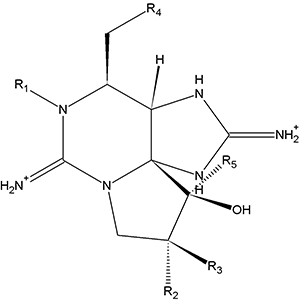
Saxitoxins
Saxitoxins (aka paralytic shellfish toxins), are a group of neurotoxic alkaloids produced primarily by marine dinoflagellates and freshwater cyanobacteria, with over 57 structural variants. They are acutely neurotoxic (target = sodium channels), and are frequently responsible for shellfish related human death. It is suspected they are under-reported in freshwater systems since many screening methods are prone to under-report PSTs. We have observed low planktonic levels of saxitoxin (<20 ppb) up to high (>10000 ppb) in benthically sourced periphyton.
-
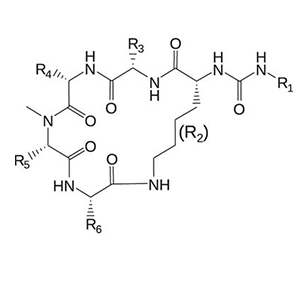
Anabaenopeptins
Anabaenopeptins (hexapeptides) are hepatotoxic (target = protein phosphatases in liver) metabolites that have received very little attention even though they are concomitant with other cyanotoxins (e.g. microcystins). There are currently >96 structural variants of these toxins, with complexity on the same level as MCs/NODs. Although similar in toxic action, anabaenopeptins have been shown to be less toxic than MCs/NODs by at least an order of magnitude, when using protein phosphatase assays.
-

Guanitoxin
Guanitoxin (previously known as anatoxin-a(s)) inhibits acetylcholinesterase, resulting in an excess level of acetylcholine, instead of acting as acetylcholine (e.g. anatoxin-a). Intoxication results in the over-excitation of neurons, which can result in paralysis and death. Since the structure is similar to organophosphates, the analyte can be screened for, but currently cannot be quantitated due to a global wide shortage of a calibration standard.s here
What Levels are Considered Safe?
Although the US EPA has released 10-day health advisory guidelines for cylindrospermopsin and microcystins in drinking water, other toxins (e.g. anatoxins, saxitoxins) have still not been addressed. Further, there are still not any enforceable laws or regulations in place to protect the public from cyanotoxins in drinking water. Therefore, many states have adopted their own strategies for monitoring toxins.
The following tables include some Drinking Water (D.W.) Guidance Values recommended by the United States Environmental Protection Agency (US EPA) and the World Health Organization (WHO). The following values are not enforceable in the United States at a federal level. State specific programs and guidelines are summarized here.
The following tables include some Drinking Water (D.W.) Guidance Values recommended by the United States Environmental Protection Agency (US EPA) and the World Health Organization (WHO). The following values are not enforceable in the United States at a federal level. State specific programs and guidelines are summarized here.